How To Make An Obd Scan Record For Your Garage
A useful OBD scan record is a one-page (or short photo set) handover of what the vehicle reported and what you observed—not a diagnosis, parts order or MOT prediction. Capture facts before clearing codes or replacing parts, then let the garage finish testing.
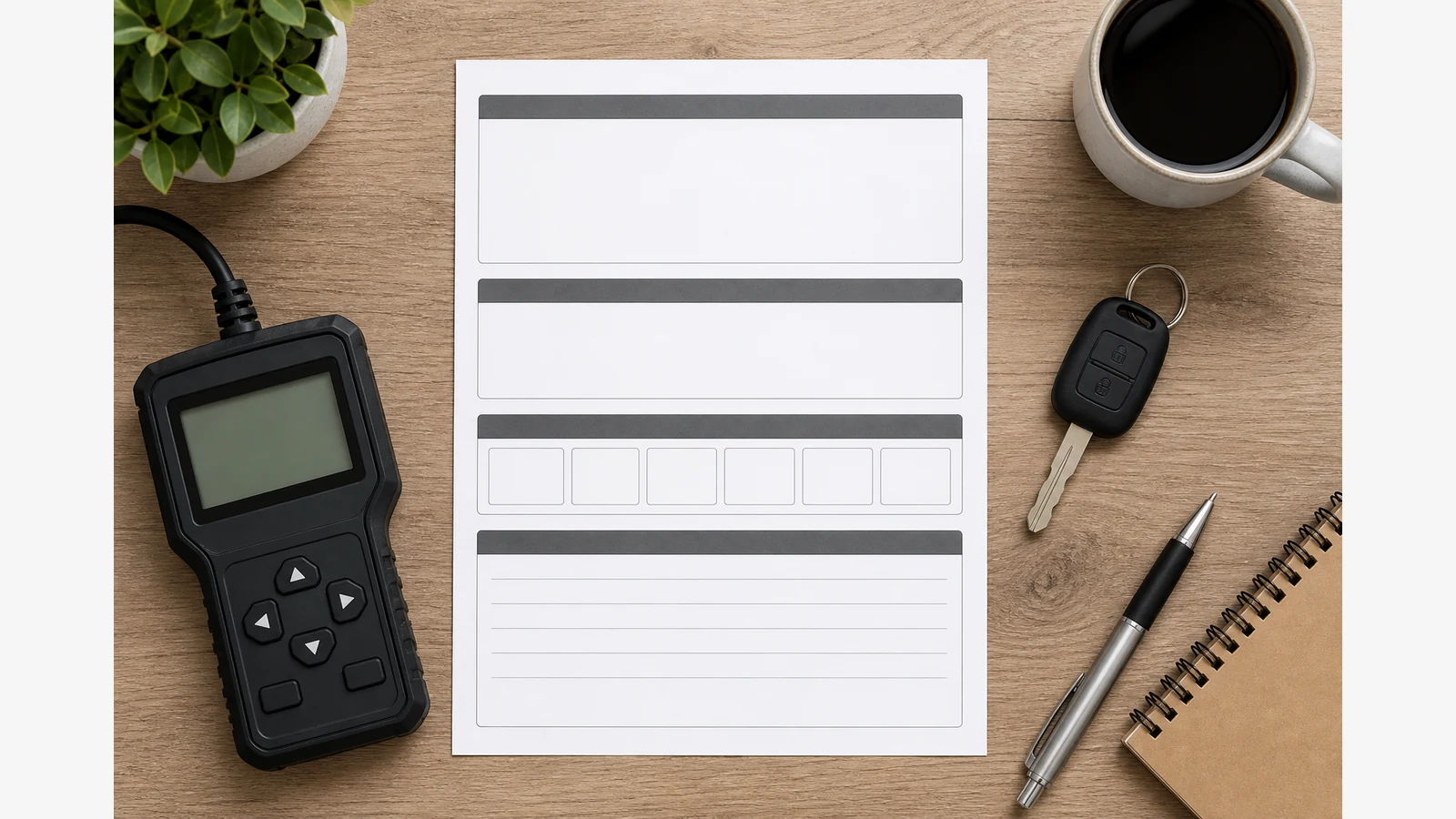
One-page handover template
Copy this structure into a note or blank checklist:
- Date and mileage
- Warning-lamp behaviour (colour, steady or flashing, when it appeared)
- Symptom in the driver’s exact words
- Code string(s) and on-tool status labels
- Freeze-frame fields copied exactly, including N/A or blank entries
- Any relevant live data you intentionally captured later, labelled as live—not freeze frame
- What changed before the fault (fuel, recent work, journeys) without guessing the cause
- Tool identity and vehicle year/make/model as you entered them
Leave a blank “garage findings” box rather than filling it with your own parts conclusion.
Record lamp behaviour and the symptom in the driver’s words
Workshops need the human timeline as much as the code list. Note whether the lamp came on at idle, under load, after rain, or only once. The AA explains that the engine management lamp does not identify a specific fault and advises professional checking, with red or flashing lamps or serious symptoms treated as stop-and-seek-help situations—record those stop conditions clearly if they apply.
Capture code text, status and freeze frame without interpretation
Official tool documentation supports viewing and recording DTCs and freeze frame, and warns that clearing erases temporary ECU information including freeze frame without repairing the cause. Options still vary by vehicle.
- Photograph whole screens rather than rewriting descriptions from memory.
- Preserve pending, stored/confirmed and permanent labels exactly.
- Do not “correct” wording to match a forum post.
- Do not clear codes to tidy the report before the garage sees it.
Note prior changes — but do not clear or replace parts first
Mention recent battery work, sensor replacements, exhaust work or fuel quality concerns as timeline facts. Avoid clearing codes or installing parts “to see what happens” before the garage inspects, because you may erase freeze-frame context and confuse readiness state. Permanent codes will not disappear with an ordinary clear anyway.
Redact VIN and personal details when sharing beyond your chosen garage
Share only what the chosen workshop needs. Remove or redact VIN, registration, phone numbers and account emails from photos before posting elsewhere. A scan record cannot prove roadworthiness, a safe repair, or an MOT outcome; it only preserves evidence.
If you want a wired handheld that can read, view and record supported OBD results for that handover pack, review the Foxwell NT301 OBD2 scanner details and confirm vehicle-specific menus in the manuals. Only a 12-month warranty duration is stated here. See also freeze frame data checklist before clearing a code and car fault code reader UK buying guide.
Should I include my own diagnosis on the sheet?
No. Provide observations and scan facts. Let the garage complete testing under manufacturer procedures.
Is a phone photo of the scanner screen enough?
Often yes, if the full code text, status and freeze-frame fields are readable and labelled with date and mileage.
Can the garage rely on my scan instead of their own?
Treat your record as a starting handover. Workshops may still rescan with their own equipment.
Does a tidy scan record guarantee a cheaper repair?
No. It can reduce duplicated history-taking, but labour and parts still depend on confirmed findings.