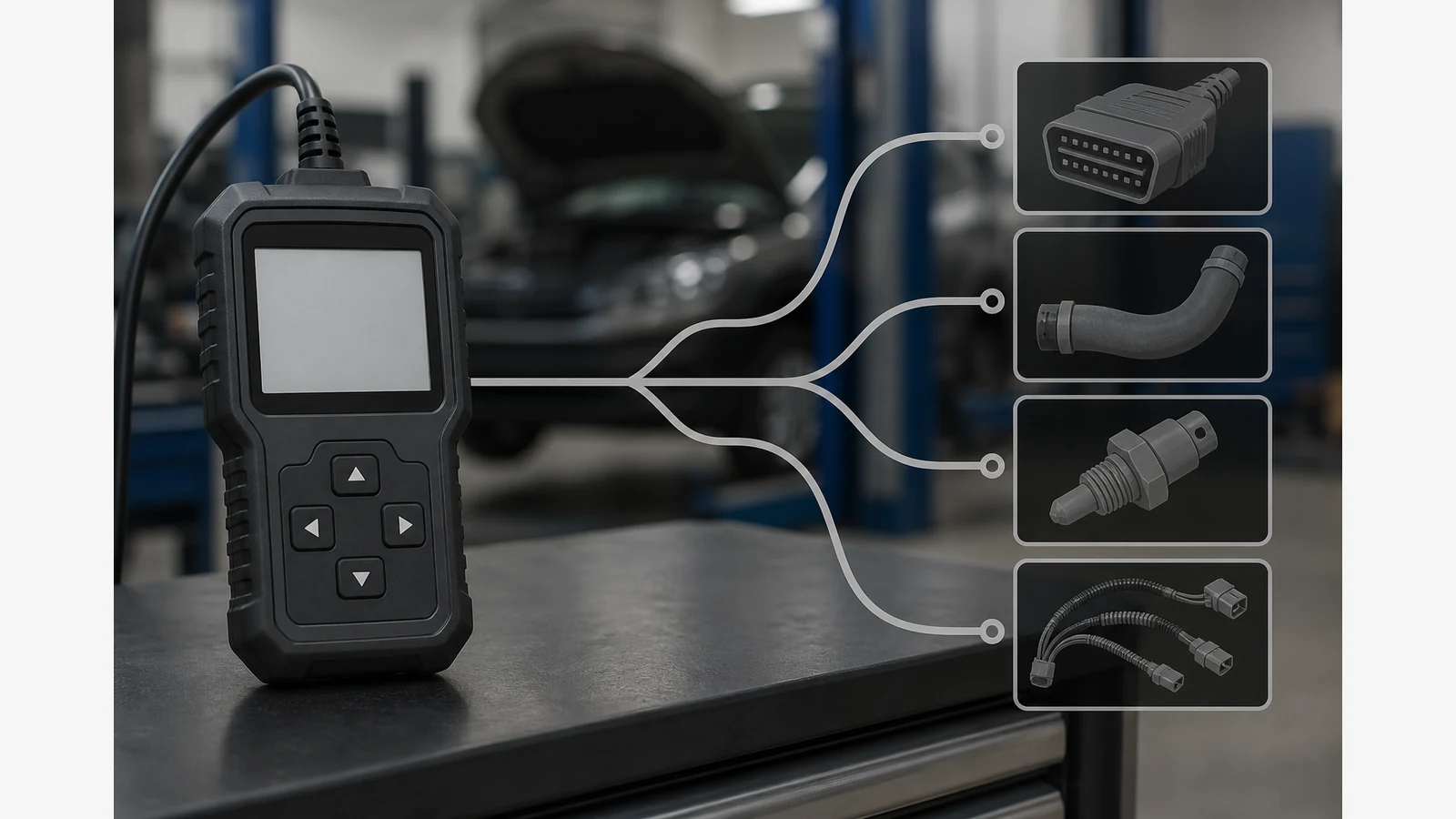
Why a Fault Code Does Not Prove Which Part Failed
A diagnostic trouble code (DTC) identifies a detected condition or monitored area reported by the vehicle’s OBD system. It is not a guaranteed failed component, a shopping list, or proof that replacing one part will fix the warning lamp.
What a DTC actually points to
Standardised DTC definitions describe fault syntax used by OBD systems, while manufacturer-specific ranges remain reserved for vehicle-maker definitions. The code string and its short description are leads. They tell you which monitored condition was flagged, not which physical part is confirmed dead.
Tool manuals likewise treat code reading as access to diagnostic information that varies by vehicle. Clearing codes erases temporary information and does not repair the cause.
Why wiring, power, leaks and related systems can share one code path
Many codes describe a circuit, signal plausibility issue or system performance concern. The same path can be disturbed by:
- connectors and corrosion
- wiring continuity or chafing
- power or ground supply problems
- vacuum or exhaust leaks that affect related readings
- operating conditions that only appear under load, cold start or hot soak
- interaction with another system that shares sensors or actuators
Replacing the first named part without inspection is the “parts cannon” trap: expensive, inconclusive, and still leaving the original evidence untested.
Use status, freeze frame, symptoms and vehicle information to form—not finish—a diagnosis
Build a working picture before ordering anything:
- Record the exact code text and status (pending, stored/confirmed, permanent or the tool’s label).
- Save freeze frame where available and separate it from current live data.
- Write the symptom in the driver’s words and note lamp behaviour.
- Confirm year, make, model and any manufacturer service information for the code family.
- Inspect and test using the manufacturer procedure before deciding a part has failed.
The AA reminds drivers that the engine management lamp does not identify a specific fault and advises professional checking. Treat that as a boundary for DIY interpretation.
Red or flashing warning-lamp stop conditions for UK drivers
Stop and seek help rather than continuing DIY parts swapping when:
- a warning lamp is red or flashing
- serious drivability, smoke, unusual noise, loss of power or overheating accompanies the lamp
- electrical, emissions or safety-system diagnosis is required beyond a basic scan
- manufacturer procedures call for specialist tools or guided tests you cannot complete safely
A scan record still helps a garage, but it does not authorise unsafe roadside work or an MOT pass claim.
What to give a garage, next step and FAQ
Provide code text, status, freeze-frame notes, lamp behaviour, mileage, recent work or fuel events, and symptoms without your own parts conclusion. If you later want a wired handheld for gathering that evidence on supported OBD functions, see the Foxwell NT301 OBD2 scanner details and verify vehicle-specific availability in the manuals. Only a 12-month warranty duration is stated here. Related reading: why two code readers show different fault descriptions and car diagnostics tool explained — UK buyer’s guide.
Can I trust the plain-English description on the scanner?
Treat it as a lead. Prefer current manufacturer service information over the most confident-sounding short phrase.
Should I clear the code to see if the part is fine?
No. Record evidence first. Clearing can erase freeze frame and reset monitors without repairing the cause.
Does one DTC always mean one failed sensor?
No. Shared circuits, wiring, leaks and related systems can produce the same code path.
Will replacing the part named in the description pass an MOT?
No. A DTC is not an MOT decision, and parts replacement without confirmed cause may not resolve the lamp or the underlying condition.